Monday, 11 August 2025

When “The Customer is Always Right” Doesn’t Fly

In shops and restaurants, the old adage “the customer is always right” works well enough. It encourages attentive service, keeps staff polite, and makes customers feel valued. But on an airplane, that same mantra can become a dangerous illusion  one that puts lives, reputations, and even careers at risk.

Air travel is not retail. It’s a high-risk operation bound by strict safety regulations and procedures. Unlike in a boutique or cafĂ©, where a customer’s refusal to comply with a request may cause annoyance at worst, in aviation it can cause delays, endanger passengers, or trigger life-threatening emergencies. The recent spate of passenger misbehaviour in Nigeria makes the case clear: you can’t treat an aircraft cabin like a marketplace, and you can’t treat the crew like waiters who must tolerate anything in the name of “customer satisfaction.”


Ibom Air: A Fire Extinguisher, a Fight, and a Lifetime Ban

Not long ago, an Ibom Air passenger turned a routine flight into a scene out of a bad movie. After being told to switch off her phone, reports say she became aggressive, pulled at a crew member’s wig, and  most alarmingly  attempted to grab a fire extinguisher from its mount. That single action crossed from rudeness into outright danger. Aircraft fire extinguishers are not decorative props; they are carefully maintained safety tools meant for specific emergencies. Misusing or damaging them could jeopardize everyone on board.

The airline did not shrug it off. The passenger was banned for life and faces possible legal action. Public reaction was mixed  some argued the punishment was harsh, others applauded it. But what’s not up for debate is that in aviation, interfering with safety equipment is a serious offense. No “customer service” philosophy justifies it.


ValueJet & KWAM 1: Celebrity Clash Meets Civil Aviation Law

Another recent case unfolded at Nnamdi Azikiwe International Airport in Abuja, involving Fuji legend KWAM 1 and a ValueJet flight. The incident reportedly disrupted the aircraft’s ground movement and led to the Nigeria Civil Aviation Authority (NCAA) suspending the licences of both pilots involved while investigating the chain of events.

This was more than a celebrity spat. Any interference with aircraft movement  whether on the tarmac or taxiway  is a direct safety hazard. It forces pilots to take non-standard actions and can delay take-off until the risk is neutralized. The NCAA’s decision to suspend licences shows that accountability in aviation cuts both ways: passengers and crew alike are held to the highest safety standards.


The Lessons We Should Learn

Both incidents highlight a truth some travellers overlook: once you step onto an aircraft, you are entering a safety-controlled environment where the captain and crew are legally responsible for every soul on board. Their instructions aren’t “suggestions” to be debated  they’re safety requirements under international and national aviation law.

For passengers, the lesson is simple:

  • Obey crew instructions immediately and without argument.
  • Never tamper with safety equipment  it’s not only dangerous, it’s a prosecutable offense.
  • If you have a grievance, channel it through official complaint processes after the flight, not by staging a midair protest.

For airlines, it’s a reminder to:

  • Train crew on firm but calm de-escalation techniques.
  • Apply sanctions transparently so the public understands they are about safety, not vendettas.
  • Support regulatory bodies in holding everyone  passengers and staff  accountable.

Why “Customer is Always Right” Can’t Fly

The aviation industry exists on a foundation of discipline, precision, and hierarchy. The cabin crew are not simply there to serve drinks and snacks; they are trained safety officers responsible for managing emergencies, evacuations, and passenger compliance. Allowing any individual to override that authority because “the customer is always right” is to invite chaos  and, in the worst cases, tragedy.

We wouldn’t expect a passenger to walk into the cockpit and adjust the flight plan because they “paid for their ticket.” So why should we excuse behaviour that interferes with crew duties, compromises equipment, or disrupts flight operations?


The Bottom Line

In aviation, the customer is not always right. Sometimes, the customer is dangerously wrong. And when that happens, airlines and regulators must act swiftly and firmly  as we’ve seen with Ibom Air’s lifetime ban and the NCAA’s pilot licence suspensions in the ValueJet case.

The next time you board a plane, remember: you are not just a customer. You are part of a temporary, tightly regulated flying community where safety is the top priority. Respect that  and you’ll not only make your journey smoother, you’ll help ensure everyone lands safely.

-Steve Owaduge 


Saturday, 9 August 2025

From Heathrow to Abuja: When Celebrity Clashes Take Off

Airports have long been stages for celebrity drama, but few incidents have drawn as much public attention as Naomi Campbell’s 2008 Heathrow confrontation and KWAM 1’s recent Abuja airport saga.

In April 2008, British supermodel Naomi Campbell, then a British Airways passenger of nearly three decades, found herself at the center of a storm at Heathrow’s newly opened Terminal 5. A dispute over a missing bag spiraled into a heated exchange with airline staff, leading to her removal from the aircraft and arrest. She was later charged with assaulting a police officer and other related offenses. Reports of a British Airways ban followed, though her spokesperson denied any permanent grounding.

Fast-forward to August 2025 in Nigeria’s capital: Fuji music legend Wasiu Ayinde Marshal, popularly known as KWAM 1, clashed with aviation security at Nnamdi Azikiwe International Airport. Authorities allege he attempted to board a ValueJet flight carrying liquid in a flask, believed to be alcohol, contrary to safety rules. When challenged, he allegedly poured the contents on security personnel and physically blocked the aircraft from taxiing. The Nigerian Civil Aviation Authority (NCAA) responded with firm measures: suspending two pilots, placing KWAM 1 on a six-month no-fly list, and petitioning the Attorney-General and Inspector-General of Police for prosecution.
KWAM 1 later issued a public apology, insisting the flask contained water for medical reasons and expressing regret to President Bola Tinubu, aviation officials, airline staff including pilots, passengers, and fans. Despite the apology, the incident remains under legal and regulatory review.

Though separated by nearly two decades and continents apart, both cases share a striking pattern: celebrity frustration escalating into public confrontation, attracting intense media scrutiny, and resulting in serious consequences. Yet the underlying issues differ, Campbell’s dispute centered on customer service and personal belongings, while KWAM 1’s case touches on aviation security protocols and flight safety breaches.

From London’s Terminal 5 to Abuja’s departure gates, these episodes show how one impulsive moment in an airport can disrupt schedules, damage reputations, and leave even the most celebrated travelers grounded.

The KWAM 1 incident at Abuja airport offers several important lessons:  
First, aviation security rules apply to everyone, regardless of fame or status; even the most celebrated figures cannot bypass safety protocols such as restrictions on liquids. 

Second, minor disputes can escalate quickly in high-security environments, and what began as a disagreement over a flask turned into a full-blown security breach when he allegedly poured its contents on staff and blocked the aircraft from taxiing. Such actions have wide-reaching consequences, disrupting flights, inconveniencing passengers, and even leading to the suspension of crew members. 

Third, reputations built over decades can be damaged in moments, especially when the incident is amplified by the media and public scrutiny. The swift response by the Nigerian Civil Aviation Authority including a six-month no-fly ban and petitions for legal prosecution, underscores how quickly the law acts in matters of airport security. 

While his public apology may help ease tensions, it cannot erase the official sanctions or the lasting impression the incident has left. For public figures especially, the episode is a reminder that in the age of instant news and viral videos, one lapse in judgment can become a defining moment.

Saturday, 2 August 2025

Respecting the Host: Lessons for the Igbo at Home and Abroad


By Steve Owaduge 

In recent years, Nigerians of Igbo extraction have faced growing criticism abroad—in countries such as China, Malaysia, the UAE, and Ghana. The complaints have ranged from allegations of internet fraud and drug trafficking to overstaying visas or breaching local laws. Back home, a similar sentiment appears to be taking shape. In Lagos State, over 20 streets in Ajeromi-Ifelodun Local Government Area bearing Igbo names were recently renamed, sparking outrage and ethnic tension.

While it is easy to interpret these actions as pure discrimination or tribal bias, we must be honest enough to acknowledge that every action—fair or unfair—often comes from a place of perception, concern, or response to repeated patterns.

Abroad: Why the Host Countries Are Reacting

Foreign countries are not wrong to expect law-abiding conduct from immigrants. Whether in Dubai, Kuala Lumpur, or Accra, the host nation has the right to enforce its laws and protect its citizens. Unfortunately, the frequent involvement of some Nigerians—many of them Igbos—in criminal activities like scams or drug trafficking gives these governments a reason (or excuse) to act against entire communities.

In Ghana, local traders protested against the dominance of Nigerian traders in markets reserved for Ghanaians under local law. Some of these traders—many of whom are Igbo—operated without full compliance to local licensing rules. While their hustle is admirable, it’s also a reminder that when you are in another man’s land, you must respect his rules and boundaries.

The same applies to the UAE and Malaysia. When immigration rules are ignored, or public order is threatened, governments respond. Yes, sometimes harshly. But the point is: your brilliance, business sense, or boldness should never make you believe you're above the laws of your host country.

At Home: The Street Renaming in Lagos

Now let’s talk about the Lagos street renaming. The decision to replace Igbo street names with Yoruba ones in a predominantly Yoruba area may seem harsh, but it’s also worth considering the cultural sensitivity and territorial pride of host communities. Many Lagosians feel that their identity is being watered down or replaced by outsiders. Right or wrong, that feeling is real—and governments respond to the sentiments of their people.

While Lagos is home to all Nigerians, it is still Yoruba land historically and culturally. When residents feel that symbolic spaces like street names no longer reflect their identity, there will be pushback. Perhaps the renaming could have been handled with better consultation—but the message is clear: every guest must be mindful not to dominate the host's space, even unintentionally.


A Word to the Igbo in the Diaspora

The Igbo are among the most industrious, resilient, and ambitious people on earth. Their success stories are many, and their contributions to Nigeria’s economy—both at home and abroad—are undeniable. But with great visibility comes great responsibility.

The truth is: when people see you everywhere—owning shops, building houses, taking the lead—it may inspire respect, but it may also breed resentment. To counter this, the Igbo must not only strive for success but also for respectful integration—blending boldness with humility, and progress with peace.

Be law-abiding. Be culturally sensitive. Don't speak carelessly about your host community or its people. Don't isolate yourselves or act as if you are above others. Most importantly, don’t let a few destroy the reputation of many.

Conclusion: Time to Rethink and Rebuild

The world is watching, and so is Nigeria. What we need now is not more accusations or division but mutual understanding, self-awareness, and responsible behavior. Yes, ethnic profiling exists, but we must not feed it. The street renaming in Lagos may not have been entirely fair, but it is a reminder: every host watches their guests—even more closely when they’re thriving.

To my Igbo brothers and sisters: you are great people. Stay great—not just in wealth or numbers, but in character and wisdom. Respect your host, whether in Lagos, Ghana, or Dubai. Let no one have reason to speak against you.


Sunday, 13 July 2025

Nigeria–United States Relations: A Review of Past Engagements and the Trump Era

Abstract:

This article explores the historical and contemporary relations between the Federal Republic of Nigeria and the United States of America, with a particular emphasis on the period during President Donald J. Trump’s administration (2017–2021). It examines the evolution of bilateral cooperation in areas such as diplomacy, security, economic exchange, and immigration. The paper argues that while earlier administrations fostered deeper developmental and diplomatic ties, the Trump era introduced a more transactional relationship marked by both strategic military engagement and controversial immigration policies.

Keywords: Nigeria, United States, Trump administration, bilateral relations, security cooperation, visa ban, foreign policy


Introduction

The bilateral relationship between Nigeria and the United States has historically been one of mutual interest, driven by shared goals of economic development, regional security, and democratic governance. As the most populous country in Africa and one of its largest economies, Nigeria has long been a strategic partner for the U.S. in West Africa. Over the decades, this relationship has undergone various shifts, shaped by changes in leadership and global political dynamics.

This paper compares the strong diplomatic and developmental ties that characterized earlier years with the more complex and controversial engagement seen during the Trump administration.


Nigeria–U.S. Relations in Historical Perspective

The George W. Bush Administration (2001–2009)

President George W. Bush's tenure marked a high point in Nigeria-U.S. relations. His historic visit to Nigeria in 2003 underlined the strategic importance of Nigeria in regional stability and economic engagement. The Bush administration launched major health initiatives such as the President’s Emergency Plan for AIDS Relief (PEPFAR) and supported democratic governance and electoral processes.

Moreover, Nigeria became a major supplier of crude oil to the U.S., while military cooperation deepened in response to rising regional threats such as terrorism and maritime insecurity.

The Barack Obama Administration (2009–2017)

Under President Barack Obama, U.S. policy towards Nigeria continued to emphasize democracy, human rights, and anti-corruption. The Obama administration played a behind-the-scenes role in encouraging a peaceful transition of power following Nigeria's 2015 presidential election. However, military support was tempered by concerns about human rights violations by Nigerian forces in the fight against Boko Haram.

Despite some diplomatic tensions, the overall tone of engagement remained constructive, and the U.S. continued to support Nigeria’s development and institutional reforms.


The Trump Administration: Strategic Shift and Controversies

Security and Military Cooperation

One of the notable shifts during the Trump era was the approval of $500 million in military sales to Nigeria, including the Super Tucano A-29 attack aircraft, which were delivered to strengthen Nigeria's fight against insurgent groups. This move reversed the Obama-era policy of withholding military aid due to human rights concerns.

Nigeria remained an important partner in regional counterterrorism strategies, with increased intelligence and training cooperation.

Diplomatic Relations

President Trump hosted Nigerian President Muhammadu Buhari at the White House in April 2018, making Buhari the first sub-Saharan African leader to be officially invited during Trump's presidency. The meeting focused on trade, security, and governance. However, Trump’s reported derogatory remarks about African nations created a diplomatic rift and drew widespread condemnation across the continent, including in Nigeria.

Immigration Policies and Visa Ban

In early 2020, the Trump administration imposed a visa restriction on Nigerians seeking permanent residency in the United States, citing national security concerns related to information-sharing and passport data integrity. This decision sparked significant backlash, given Nigeria’s longstanding cooperation with U.S. agencies and its sizable diaspora in America.

The move was viewe

d as discriminatory and inconsistent with the spirit of partnership that had previously defined bilateral relations. It also strained people-to-people ties and affected families, businesses, and educational exchanges.

Trade and Economic Relations

During Trump’s term, the U.S. trade relationship with Nigeria saw a decline, partly due to America’s growing energy self-sufficiency. Nigeria, which once exported significant amounts of crude oil to the U.S., found its market share shrinking. While there were efforts to enhance trade in other sectors, such as agriculture and ICT, the overall economic engagement remained limited compared to previous years.


Conclusion

The relationship between Nigeria and the United States has seen periods of deep cooperation as well as diplomatic challenges. While earlier U.S. administrations prioritized development aid, health partnerships, and democratic governance, the Trump administration adopted a more transactional approach focused on security and immigration enforcement.

Though military collaboration improved under Trump, the visa ban and controversial rhetoric damaged public perception and undercut decades of diplomatic goodwill. Moving forward, both nations must rebuild trust and strengthen collaboration in areas of mutual interest, including economic development, education, democratic governance, and regional peacekeeping.


Tuesday, 10 June 2025

JUDICIAL COMMISSION OF INQUIRY ON CHIEFTAINCY MATTERS

PRESS STATEMENT

ONDO STATE GOVERNMENT RELEASES WHITE PAPER ON THE HON JUSTICE C.E.T. AJAMA JUDICIAL COMMISSION OF INQUIRY ON CHIEFTAINCY MATTERS.
INTRODUCTION

On the 30th day of January, 2015, the then Governor of Ondo State, Dr. Olusegun Mimiko CON, inaugurated Hon. Justice Ajama (rtd) Judicial Commission of Inquiry into deserving cases of Recognition, Adjustment, upgrading and elevation of Chieftaincy Stools in Ondo State. However, the previous administration of Dr Olusegun Mimiko could not implement the Commission’s report before the end of its tenure on 23rd of February, 2017.

Following several disputes and agitations emanating as a result of the Chieftaincy conflicts in the state, the State Executive Council under the able leadership of the Governor of the State, Arakunrin Oluwarotimi Akeredolu SAN at its meeting held on Wednesday 12th January 2022 constituted a six-man committee to review the recommendations of the Justice C.E.T. Ajama Commission of Inquiry on Chieftaincy Matters in Ondo State and prepare the Government White Paper on the report. The Committee was led by the Deputy Governor, Hon. Lucky Orimisan Aiyedatiwa. Other members of the committee include, Chief Olugbenga Ale, (Chief of Staff), Sir Charles Titiloye, (Attorney General & Commissioner for Justice), Deaconess Lola Fagbemi, (Commissioner for Commerce Co-operative and Industry), Asiwaju Gboyega Adefarati, (Commissioner for Local Govt. & Chieftaincy Affairs as he then was) Mr. Segun Odusanya, (Permanent Secretary, Min. of Local Govt. & Chieftaincy Affairs, Secretary of the committee).

On the 24th of August, 2022, the State Executive Council received the report of the Committee and directed that its decisions on the recommendation should be published in Government WHITE PAPER.
Consequently, Government hereby RELEASES the White Paper on the Hon. Justice Ajama Commission of Inquiry on Chieftaincy Matters in Ondo State.

A BRIEF OUTLINE OF THE CONTENT OF THE WHITE PAPERS IS AS FOLLOWS:
The White Paper is divided into Three (3) Parts namely

1. PART I - Disputed Chieftaincy declarations in Ondo State. The Government White Paper under this Part covered 51 disputed chieftaincy stools in various communities making up the 18 Local Government of Ondo State. The content of this section of the White paper is voluminous and run into many pages. The public can get the full details from the just released WHITE PAPER.

2. PART II - Recognition and creation of Minor Chieftaincies Under Part 1 Of Chiefs’ Law

The following chieftaincies stools have been created and recognized by
Government under Part 1 of the Chiefs’ Law.

1. Eleegun of Eegun
2. Asinigbo of Isinigbo
3. Oniresi of Osi
4. Olumafon of Imafon
5. Olu of Alayere
6. Olu of Eleyewo
7. Olu of Ilu-Abo
8. Olu of Abo-Asakin
9. Obalogun of Igoba
10. Ojogbariaka of Ilado
11. Elekun of Ilekun
12. Iralepo of Isinkan
13. Osolo of Isolo
14. Olujoka of Ijoka
15. Ado of Adofure
16. Olu of Ijigba
17. Ogidi of Ogidigba
18. Iginabou of Ajapa
19. Amananawei of Upke
20. Amananawei Of Biagbini
21. Torhunanawei of Olomu-Torhu
22. Amananawei of Agadagba-Obon
23. Amananawei of Bolowou
24. Apetokun of Ipoba
25. Alajowa of Ajowa
26. Elegbeda of Egbeda
27. Onikoore of Onishere Ofosu
28. Akorede of Abababubu
29. Baale of Owode-Owena
30. Aje of Ajebamidele
31. Elejigbo of Ejigbo
32. Olu of Owena-Ibutitan
33. Olu of Ipote
34. Orimadegun of Eyingun
35. Olupote of Lota
36. Olusama of Usama
37. Akemo of Bamikemo
38. Oloja Mobolorunduro Mile 49
39. Petu of Osooro
40. Odofin of Iju-Oke
41. Afijalura of Ura-Odoli, Ilutitun
42. Lurowa of Irowa, Lurowa
43. Erekiti-Luwoye
44. Oloja of Ugbe Ayeka
45. Oloja of Oke-Yegengha
46. Oloja of Odole
47. Oloja of Ugboran
48. Oloja of Araromi
49. Oloja of Bolorunduro
50. Kokunma of Ilale-Oko, Idashen Owo
51. Olose of Ose-Owo
52. Ajelu of Igbe
53. Monehin of Obinehin
54. Elereke of Ereke
55. Araromi Seaside
56. Osowa of Ugboroko
57. Arapanata of Itebu-Kunmi
58. Jinrinwo
59. Yasere of Ilepete
60. Gbogunron of Ugbo (Alagbon)
61. Idigbengben
62. Olurokun of Irokun
63. Government accepts the recommendation of the Commission for the recognition of High Chiefs of Akure Kingdom, High Chiefs of Arogbo-ijaw Kingdom under Part 1 subject to the amendment of Chiefs law to create the class of Chiefs known as High Chiefs.  

The above newly recognized Obas are on Grade C and instrument of office will soon be presented to them by the Governor.

3. Part III - Upgrading And Elevation Of Existing Chieftaincy Stool
UPGRADING OF GRADE C OBAS
         NAME  THE NEW GRADE
1. Owa-Ale of Iyo-mefa, Ikare - A
2. Ajana of Afa Oke-Agbe - - A
3. Olukun of Ikun  - - - B
4. Gbiri of Epinmi   - - - B
5. Olupesi of Ipesi - - - B
6. Olufira of Ifira   - - - B
7. Olugbe of Ugbe - - - B
8. Olojoda of Oda  - - - B
9. Asarun of Isarun - - - B
10. Adapogun of Ipogun - - B
11. Ekiri of Ero - - - - B
12. Olubule of Ibulesoro - - B
13. Olura of Igbinsin Oloto - - B
14. Obagberume of Igbodigo - - B
15. Laragunsin of Iyansan  - - B
16. Olughogho of Iju-Osun - - B
17. Olukaro of Ikaro    - - - B
18. Odibiado of Ijagba - - - B
19. Olumoru of Imoru  - - - A
20. Onimeri of Imeri    - - - B
21. Alafo of Afo      - - - - B
22. Onidogun of Idogun - - B
23. Gbaluwe of Igbootu - - B
24.  Niyon of Kiribo - -   remain in C
25. Olu of Igbobini      - - - B
26. Odogun of Igbekebo      - - B
27. Maporure of Agerige .    - - A
28. Olu of Igbokoda      - - - B
29. Ojomo of Ijebu-Owo.   - - A
30. Oloba of Uso - - -   remain in C
31. Elemure of Emure-Ile      - - A
32. Alale of Idasen      - - - B
33. Oniyere of Iyere      - - - B
34. Olupenmen of Ipenmen - - B
35. Asuada of Isuada      - - - B
36. Awosunye of Atosin - - - B
37. Aladeokun of Alade - - B
38. Alara of Igunsin      - - - B
39. Asafunrin of Igbado - - - B
40. Yangede of Epe      - - - B
41. Akogbe of Ajue      - - - B
42. Olore of Ore      - - - - B

UPGRADING OF GRADE B OBAS
1. Alale of Akungba           - - - A
2. Olusupare of Supare    - remain in B
3. Oloba of Oba-Akoko - remain in B
4. Olupe of Ipe -     - remain in   B
5. Okiti of Iju                  - - - - A
6. Ogbolu of Itaogbolu      - - - A
7. Oloba of Oba-Ile           - - - A
8. Lumure of Ayeka      -  -  remain in    B
9. Orungberuwa of Erinje           - - A
10. Lapoki-Halu of Ode-Aye      - - A
11. Ahaba of Ajagba           - - - A
12. Larogbo of Akotogbo           - - A
13. Odogbo of Omiland - - remain in  B
14. Olujare of Ijare           - - - A
15. Alara of Ilaramokin      - - - A
16. Olowa of Igbara-Oke.        - - A
17. Olute of Ute           - - - - A
18. Ojima of Okeluse      - - remain in  B
19. Olupele of Ipele .          - - - A
20. Orunja of Odigbo           - - - A
21. Oluoke of Okeigbo      - - - A
22. Olikan of Etikan            - - - A

Paramountcy of Traditional Rulers.
Government is in receipt of the recommendation of the Commission on Paramountcy of some Traditional rulers in the state. Government noted that paramountcy is not part of the Chiefs’ Law of Ondo State. Consequently, Government has directed the office of the Attorney General and Commissioner for Justice to set machinery in motion for the amendment of the Chiefs Law of Ondo State in order to accommodate this recommendation. 

Conclusion.
This Government met the Justice C. E. T. Ajama report unattended to on assumption of office.  A committee of the State Executive Council was set up to review the report and make recommendations.  The Committee didn't present its report until in February 2022 when a new Committee was set up.  The report of the Committee eventually made it possible for the Five years old Justice Ajama report to be considered and acted upon by the State Executive Council.

For full details of the approval of Government, Published Certified True Copy of the White Paper can be obtained from Ondo State Law Commission, Oda Road, Akure and the Library Department of Ondo State Ministry of Justice, Alagbaka, Akure as from Thursday 15th of September, 2022.

Government is hopeful that this exhaustive consideration and review of Chieftaincy Matters in the State will bring peace, unity and progress to our various communities. Government hereby assure the Public that the review of Chieftaincy matters will be a continuous exercise and requests or issues that have not been looked into in this White paper will be considered in the future.

God bless Ondo State of Nigeria.

Thanks.

Signed.

Sir Charles Titiloye ksm.
Hon. Attorney General and Commissioner for Justice, Ondo State.

Monday, 2 December 2024

Tinubu Tax Reform Bill

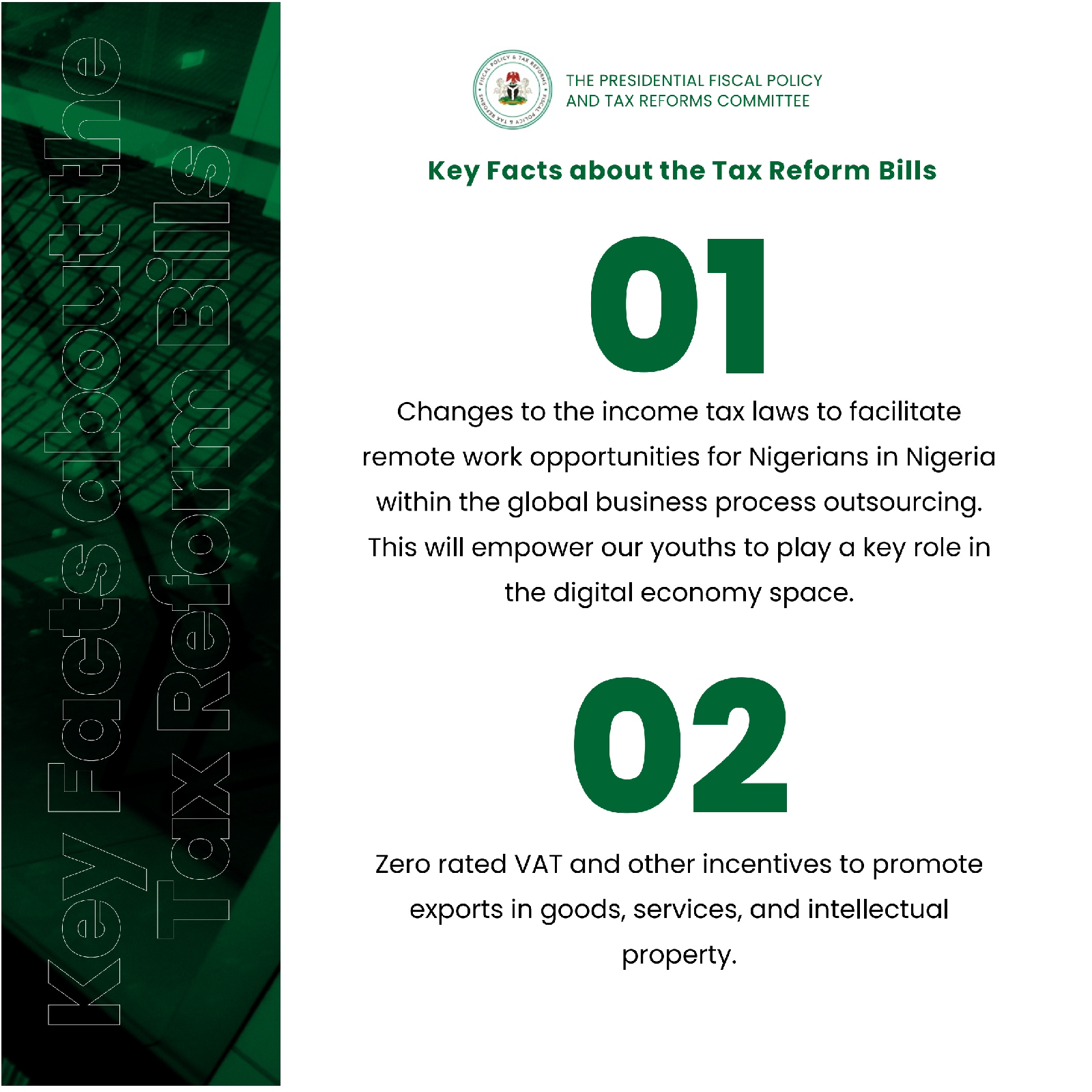
The new tax reform bill brings several benefits to the masses, as outlined in the document: 

Support for Remote Work and Digital Economy: Changes to income tax laws will facilitate remote work opportunities for Nigerians, empowering youths in the global digital economy.

Promotion of Exports: Zero-rated VAT and other incentives aim to encourage exports in goods, services, and intellectual property.

Relief for Small Businesses: Small businesses with an annual turnover of ₦50 million or less will benefit from tax exemptions, including withholding tax, VAT, and a 0% corporate income tax rate.

Reduced Personal Tax Burden: Minimum wage earners will be exempt from PAYE, and over 90% of workers in the private and public sectors will experience reduced tax burdens. 

Essential Goods Exemptions: VAT exemptions on food, education, healthcare, rent, public transportation, fuel products, and renewable energy will alleviate the cost of living, especially for low-income households.

Corporate Tax Relief: Corporate income tax rates will reduce from 30% to 25% over two years, and loss-making companies will no longer face minimum tax. 

Harmonized Tax System: Earmarked taxes on companies will be eliminated, replaced by a unified, lower single levy.

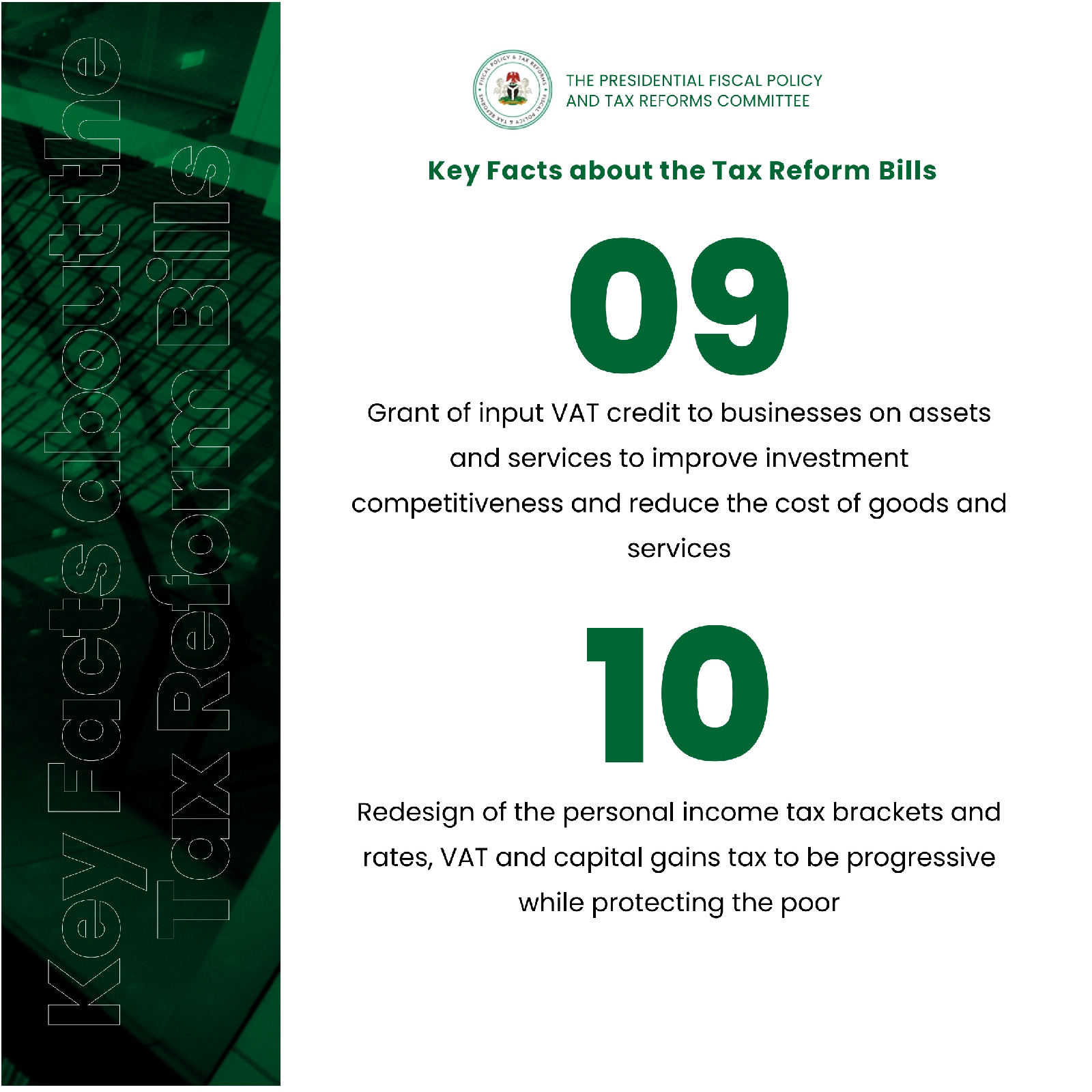
Enhanced Business Investment: Businesses will receive input VAT credits on assets and services, enhancing investment competitiveness and reducing costs.

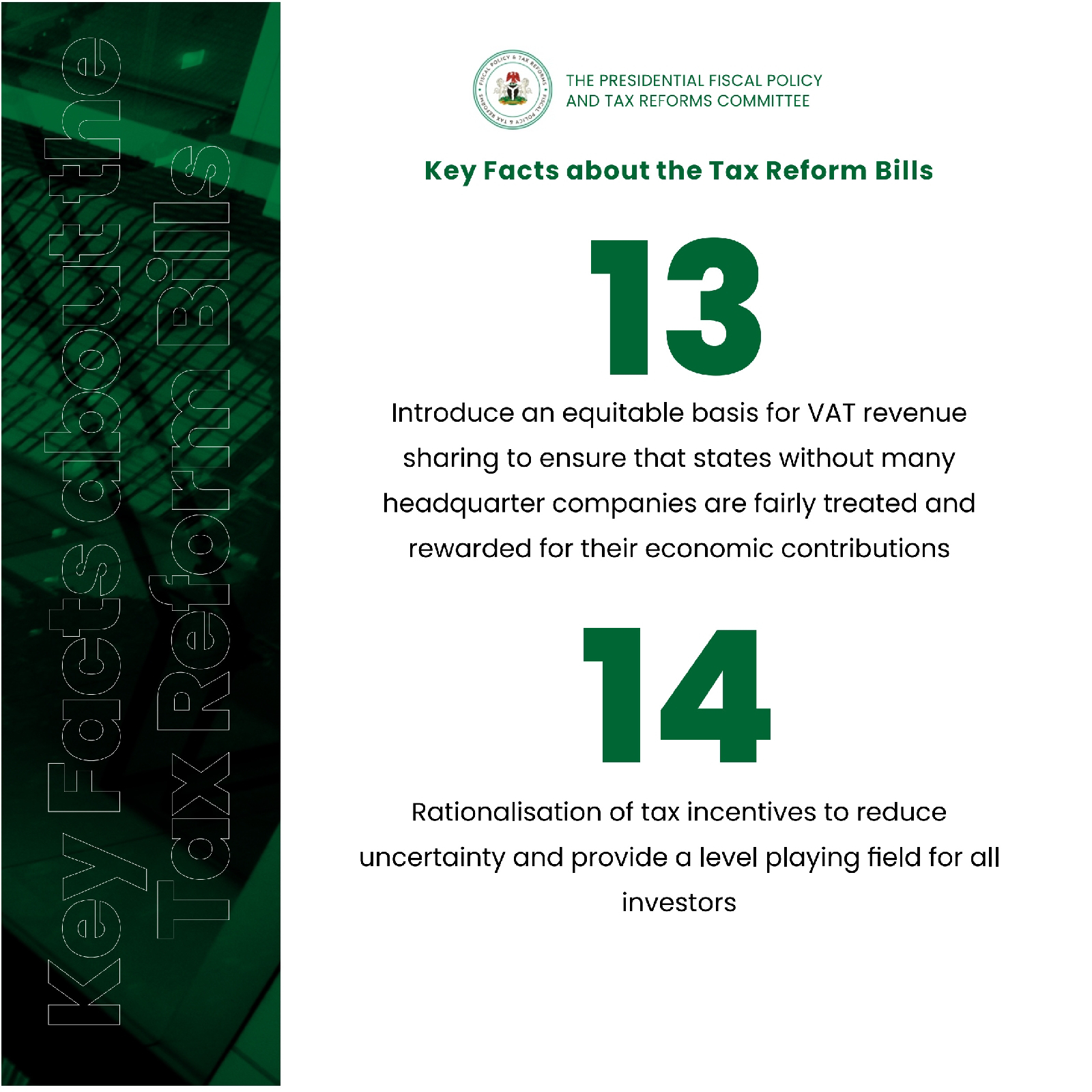
Equitable Revenue Sharing: VAT revenue sharing will be more equitable to ensure fair treatment of states with fewer headquarter companies.

Simplified Compliance: Allowing taxes on foreign currency transactions to be paid in naira reduces exchange rate pressures and simplifies compliance.

Economic Contributions Rewarded: The rationalization of tax incentives aims to provide a level playing field and reward states' economic contributions.

New National Fiscal Policy: The policy emphasizes fair taxation, responsible borrowing, and sustainable spending.

These reforms aim to create a more inclusive, equitable, and competitive economic environment for all citizens.

Sunday, 1 December 2024

Spotlight on Night Markets (Oja-Ale)

In many societies, night markets (locally known as Oja-Ale) have become a vibrant hub for economic activities, catering to diverse needs ranging from food and fashion to entertainment and essential services. The extension of business hours into the night provides several economic benefits, fostering growth and development for both individuals and the broader economy. However, for night markets to thrive, the government must ensure adequate infrastructure, particularly street lighting and security.

Economic Benefits of Long Economic Activities and Night Markets

Increased Revenue for Businesses
Operating late into the night allows businesses to serve a wider customer base, including those who may be unavailable during regular business hours. Vendors and traders in Oja-Ale benefit from the opportunity to generate more income, which, in turn, improves their living standards and contributes to the local economy.

Job Creation
Extended business hours create additional employment opportunities for people such as security personnel, cleaners, transport operators, and vendors. This is particularly significant in urban areas with high unemployment rates.

Boosting Tourism
Night markets are often cultural attractions, drawing tourists who seek unique experiences. They offer a blend of local cuisine, art, and entertainment, enhancing the region's appeal and generating foreign exchange.

Promoting Informal Economy
Night markets often serve as an entry point for small-scale entrepreneurs who lack the resources to establish formal businesses. This supports grassroots economic activities and contributes to financial inclusion.

Reduced Congestion in Day Markets
By spreading economic activities across longer hours, night markets help reduce the overcrowding and stress associated with daytime markets, creating a more balanced and accessible trading environment.

The Role of Government in Supporting Night Markets

For night markets to fully realize their potential, the government has a critical role in creating an enabling environment. Two primary areas of intervention are provision of street lighting and enhanced security.

Provision of Street Lighting
Well-lit environments are critical for night-time economic activities. Street lights:

Enhance visibility, making it easier for buyers and sellers to interact.

Reduce accidents and improve overall navigation within market areas.

Discourage criminal activities, creating a sense of safety for all participants.

Investment in solar-powered street lights can provide an affordable, sustainable, and reliable solution for areas prone to electricity shortages.

Enhanced Security Measures
Safety concerns are one of the major deterrents to night-time economic activities. Governments can address this by:

Deploying trained security personnel to patrol market areas.

Establishing surveillance systems such as CCTV cameras.

Encouraging community policing initiatives to foster trust and cooperation between traders and law enforcement.

Conclusion

The economic benefits of extended business hours and night markets are undeniable. They stimulate commerce, create jobs, and enhance the cultural and social fabric of a community. However, these benefits can only be maximized if governments prioritize the provision of essential infrastructure such as street lighting and security. By doing so, night markets like Oja-Ale can flourish, contributing significantly to the economic resilience and vibrancy of cities and towns.